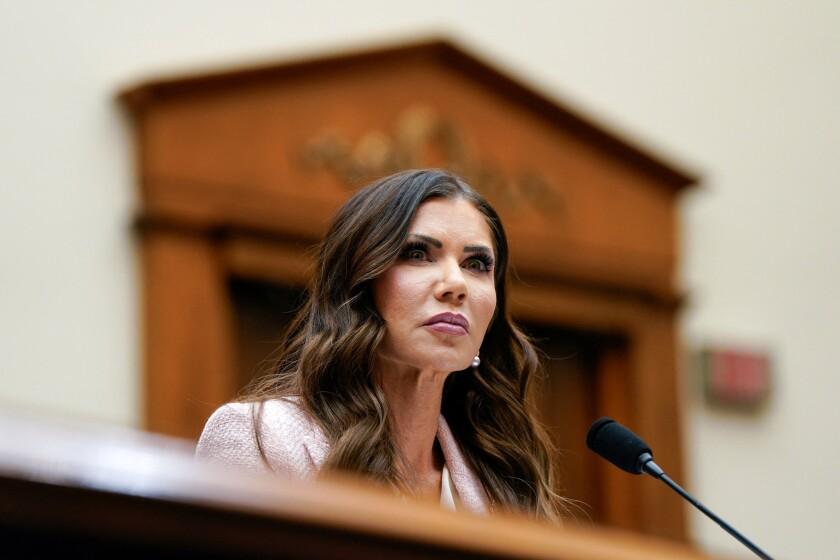
Kristi Noem’s abrupt departure from the Department of Homeland Security (DHS) on March 5, 2026, leaves the agency at a critical crossroads. Her tenure was marked by aggressive immigration enforcement, a high-profile $220 million ad campaign, internal morale issues, and public controversies that culminated in her firing. Now, the question on everyone’s mind is: Where does DHS go from here?
1. Leadership Transition and Senate Confirmation
President Trump has nominated Senator Markwayne Mullin of Oklahoma to succeed Noem as DHS Secretary. His confirmation process will be a key early test for the agency’s stability.
- Political scrutiny: Mullin is likely to face rigorous Senate hearings examining his policy positions on immigration, border security, and homeland defense.
- Bipartisan pressure: Lawmakers from both parties will monitor his approach closely, especially after the controversies surrounding Noem’s management style and the agency’s public perception.
- Timeline: Mullin is expected to officially assume leadership in late March 2026, but the transition may be delayed if Senate confirmation becomes contentious.
The new leadership will set the tone for DHS operations, internal culture, and strategic priorities for the foreseeable future.
2. Restoring Agency Morale
One of the most immediate challenges is rebuilding morale within DHS. Under Noem, several divisions, including FEMA, reportedly experienced low employee satisfaction and high internal frustration. Staff openly celebrated her departure in some offices — a sign of widespread discontent.
- Internal reforms: Mullin will need to prioritize open communication, transparency in decision-making, and support for career staffers.
- Rebuilding trust: DHS personnel must feel empowered to do their jobs without fear of political micromanagement or public scapegoating.
- Retention and recruitment: Stabilizing morale will also be critical for retaining experienced agents and attracting new talent at a time when DHS faces increasing operational demands.
3. Reassessing Immigration and Border Policies
Noem’s tenure was defined by aggressive enforcement tactics and a media-focused approach to immigration policy. This included highly controversial operations in major cities and a $220 million ad campaign urging undocumented immigrants to “self-deport.”
- Strategic recalibration: Mullin may adopt a more measured approach to enforcement, balancing operational effectiveness with legal and ethical oversight.
- Legal compliance: DHS will need to review all enforcement protocols to avoid potential lawsuits or civil rights violations that emerged under Noem.
- Public communication: Shifting away from highly politicized messaging could help DHS regain credibility with both the public and Congress.
The goal will be to maintain national security priorities while addressing past criticisms and minimizing future political fallout.
4. Strengthening Oversight and Accountability
A major takeaway from Noem’s tenure is the importance of robust oversight. Independent watchdogs and inspectors within DHS were reportedly marginalized, weakening accountability across the agency.
- Reinstating internal review mechanisms: Mullin will need to empower internal offices to audit, investigate, and report without interference.
- Transparency initiatives: Releasing clear guidelines and reports on enforcement actions and budgetary decisions could restore trust among lawmakers and the public.
- Collaboration with Congress: DHS leadership must rebuild relationships with key committees and bipartisan allies to demonstrate that the agency is accountable and well-managed.
Effective oversight is not just a bureaucratic requirement — it’s essential to restoring DHS’s reputation and legitimacy.
5. Policy Priorities Beyond Immigration
While immigration and border security were central under Noem, DHS oversees a broad portfolio, including cybersecurity, disaster response, and counterterrorism.
- Cybersecurity focus: Mullin may prioritize fortifying national infrastructure against cyberattacks, especially in the wake of increasing global threats.
- Disaster preparedness: FEMA operations, historically under scrutiny during crises, will require strengthened planning and interagency coordination.
- Counterterrorism: The agency must maintain vigilance against domestic and international threats while navigating political and operational constraints.
A holistic approach will signal that DHS is refocusing on its core mission rather than serving as a platform for high-profile political agendas.
6. Public Perception and National Credibility
Perhaps the biggest challenge is regaining public trust. DHS has faced criticism from both sides of the political aisle, making credibility a top priority.
- Media strategy: Moving away from self-promotional campaigns toward transparent, informative communication will be key.
- Community engagement: Partnering with local leaders and advocacy groups can help DHS demonstrate accountability and responsiveness.
- Measuring success: DHS may adopt metrics to track not just enforcement outcomes but also compliance with ethical and legal standards.
Rebuilding credibility will require patience, clear strategy, and a genuine commitment to nonpartisan governance.
7. Long-Term Implications
The leadership change at DHS is more than a personnel swap — it could reshape the agency’s trajectory for years to come. Key long-term considerations include:
- Institutional resilience: Strengthening internal systems to prevent future leadership crises.
- Bipartisan cooperation: Ensuring DHS can function effectively regardless of political shifts in Washington.
- Policy continuity vs. innovation: Balancing the need for ongoing operations with the opportunity to rethink priorities and modernize practices.
In many ways, DHS is at a turning point — a chance to emerge stronger, more professional, and more credible than ever before.
Conclusion
The departure of Kristi Noem has opened a critical window for reflection and reform at the Department of Homeland Security. From leadership and morale to oversight and public perception, the path forward is challenging but full of potential. How DHS navigates this transition will have lasting consequences for national security, immigration policy, and public trust in one of the nation’s most important agencies.
